
Connecting Bank Accounts with LoopAI
Connecting your bank account to LoopAI lets Loop verify expected payouts, reconcile bank-statement revenue, and surface variances against your delivery-platform deposits. This article walks through:
- Connecting a bank with Plaid
- Mapping bank accounts to locations
- Reconnecting a bank when credentials expire
- Disconnecting a bank
- Uploading bank statements manually (for banks not supported by Plaid)
1. Connect a bank with Plaid
Step 1 — Log in to Loop. Sign in to your Loop account at the usual login URL.
Step 2 — Open Bank Reconciliation. From the left navigation, click the Finance icon (this top-level module was previously called Balance). Inside Finance you'll see two sub-sections: Finance (revenue / income statement) and Accounting (close-the-books). Bank Reconciliation lives under Accounting — click Bank Reconciliation there.
You'll land on a page titled Accounting || Bank Reconciliation with payout reconciliation stats and two action buttons in the top right: Upload bank data and Connect bank account by store.
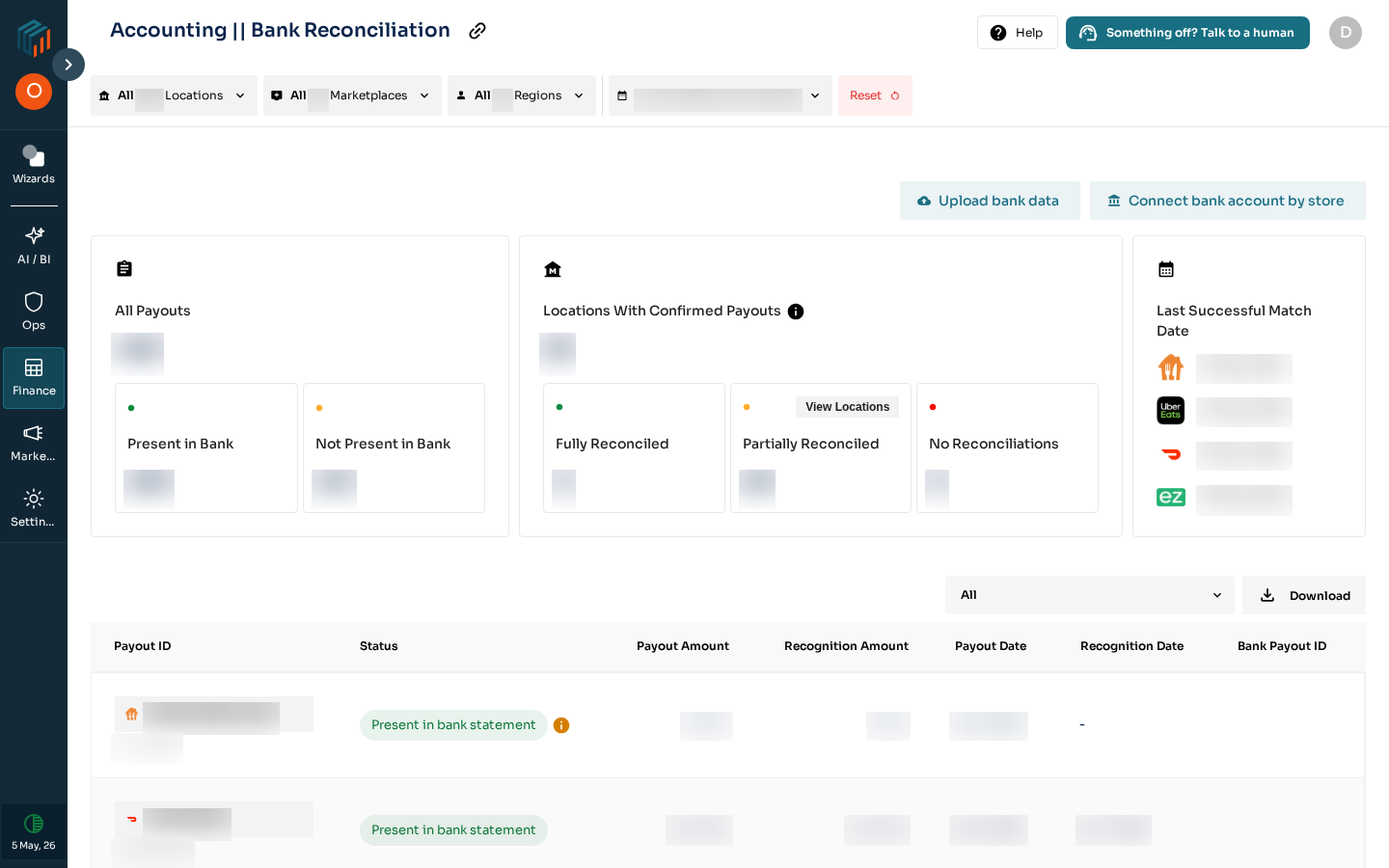
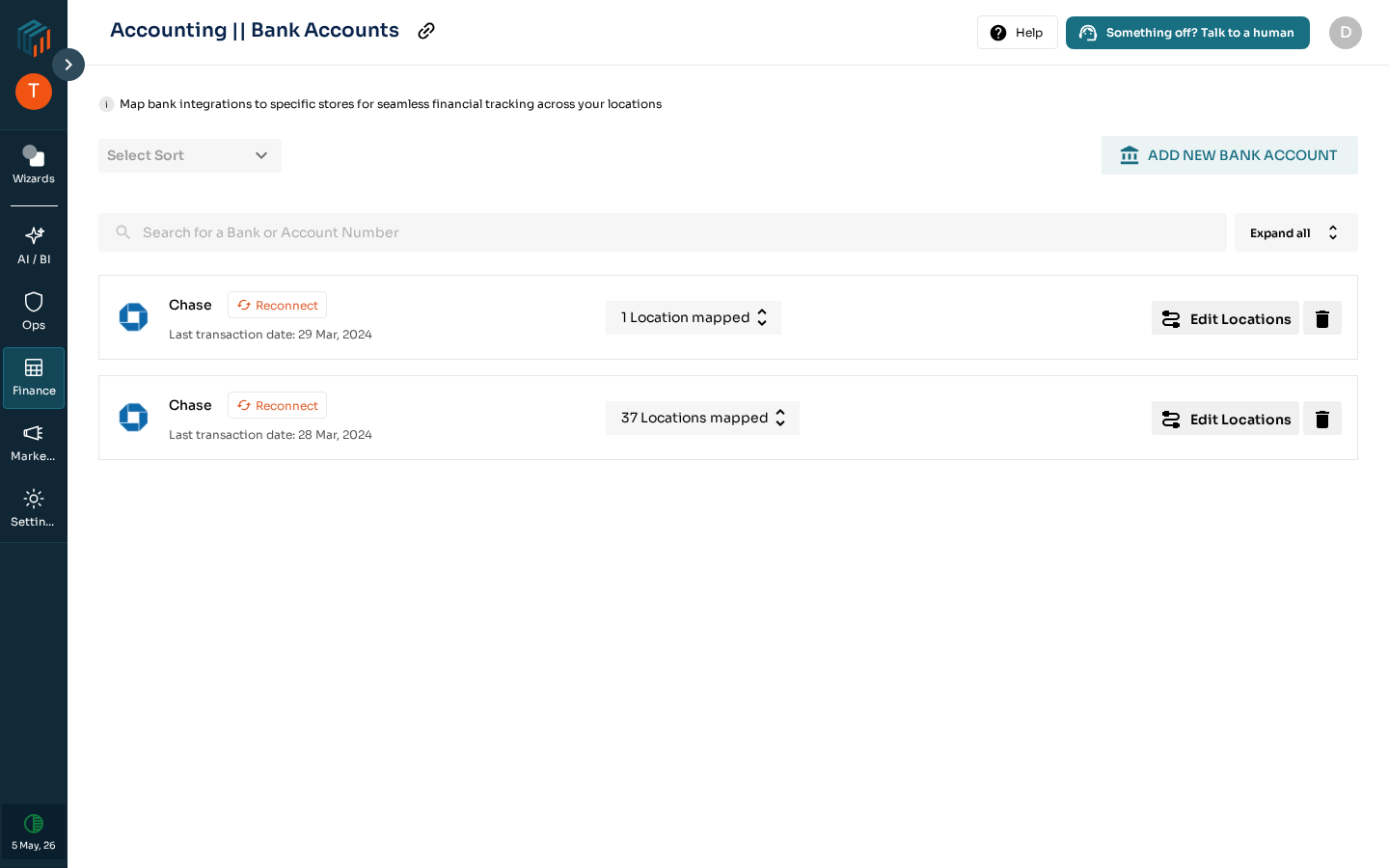
Step 3 — Open the Bank Accounts panel. Click Connect bank account by store in the top right. This opens the Bank Accounts panel listing any banks already linked to your org. New customers will see an empty panel; existing customers will see one tile per connected bank, each showing the bank name, connection status, last transaction date, and the number of locations mapped.
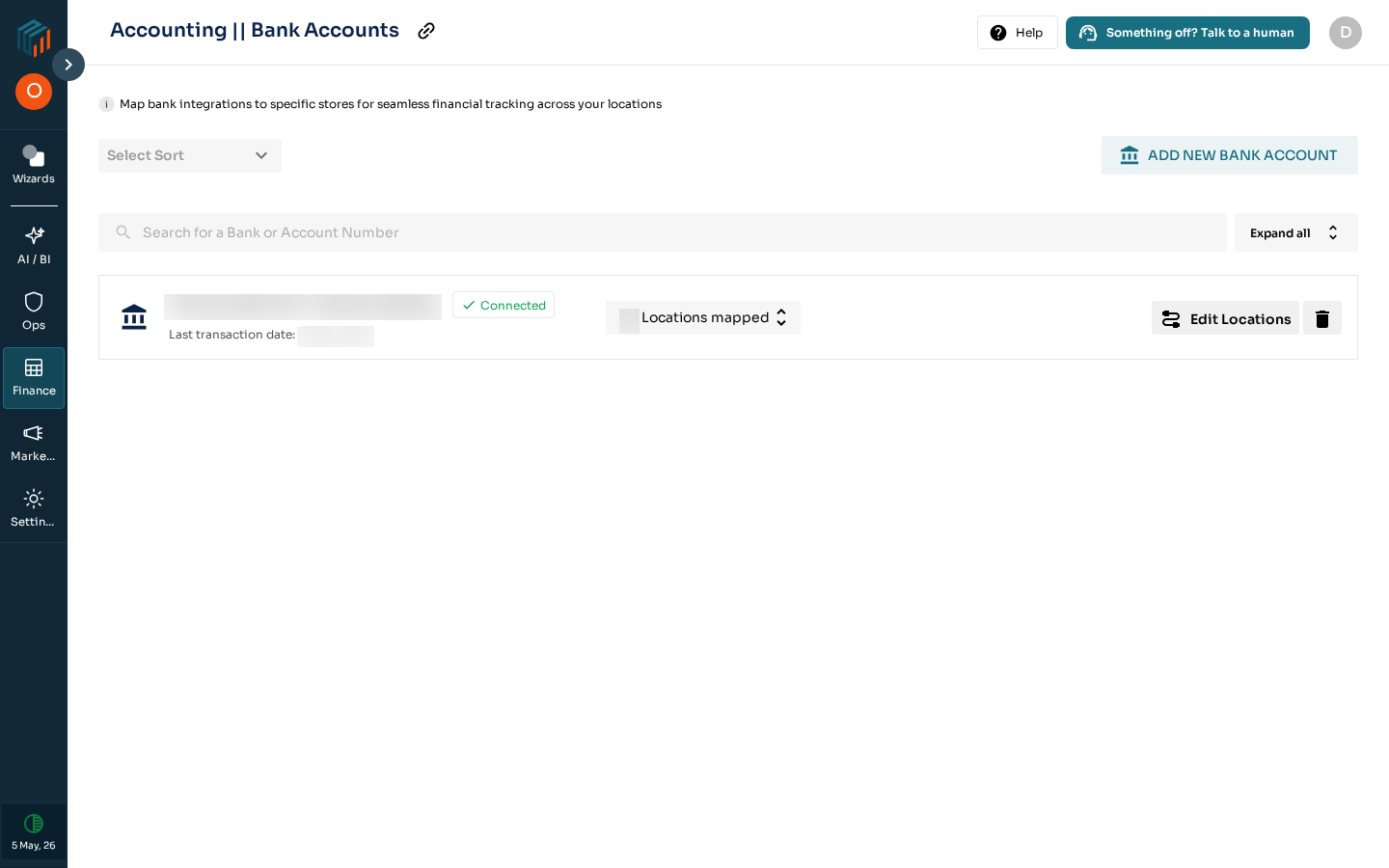
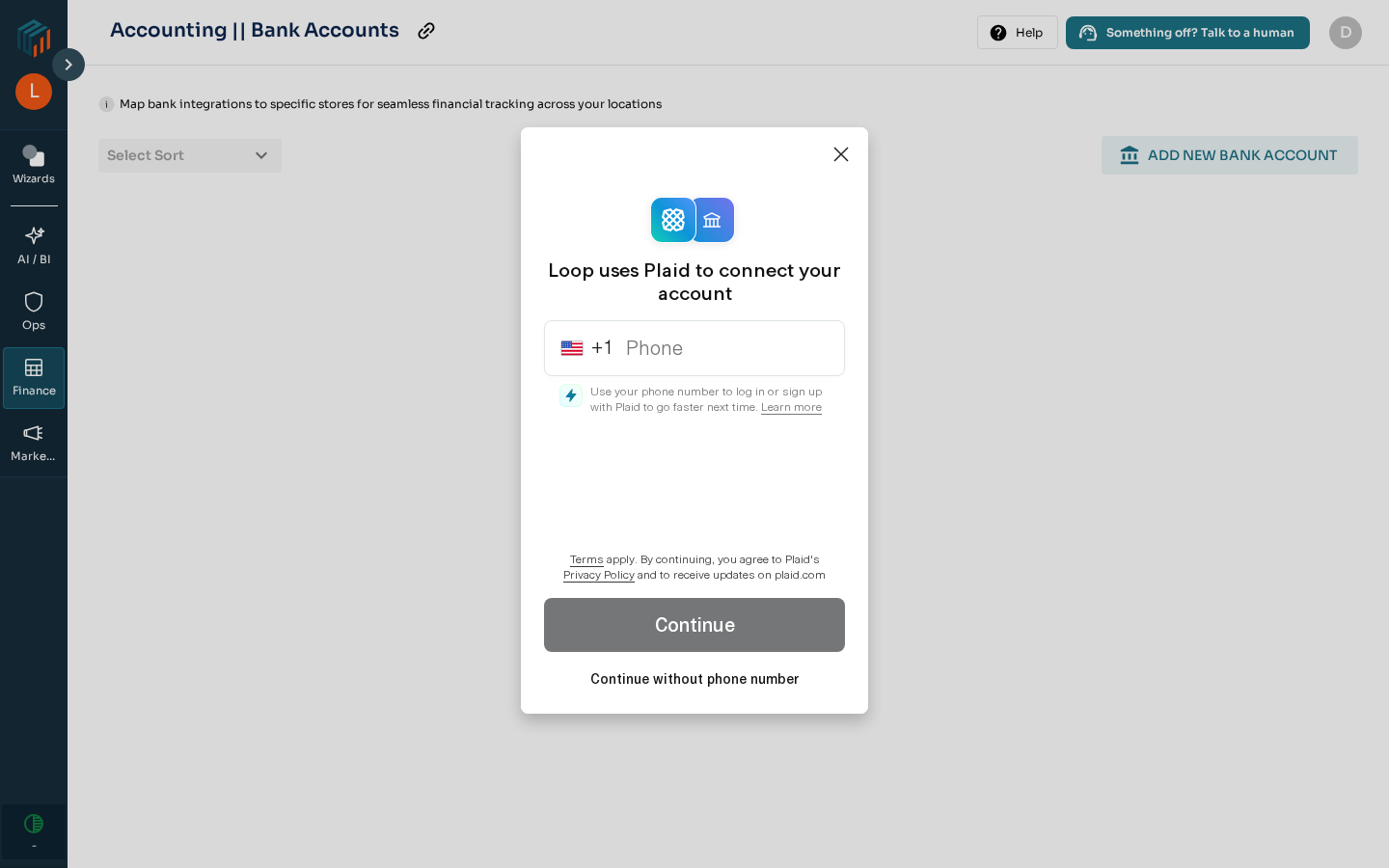
Step 4 — Add a new bank. Click ADD NEW BANK ACCOUNT in the top right of the panel. A Plaid dialog opens with the message "Loop uses Plaid to connect your account." You can either enter a phone number to speed up future Plaid sign-ins or click Continue without phone number.
Step 5 — Choose your bank. Plaid will show a searchable list of supported institutions. Search for and select your bank.
Step 6 — Enter your bank credentials. Sign in with your online-banking username and password. If your bank requires MFA (a code, security question, or app prompt), complete it inside the Plaid dialog.
Step 7 — Select the accounts to connect. Plaid lists every account at that bank. Select every account whose deposits you want Loop to reconcile (typically all operating/checking accounts that receive marketplace payouts). You can connect multiple accounts in one go.
Step 8 — Confirm. When the Plaid dialog closes, the new bank appears in the Bank Accounts panel with a green Connected badge and the date of the most recent transaction Plaid synced.
2. Map bank accounts to locations
Loop needs to know which bank account corresponds to which physical location so that payouts reconcile correctly.
- On the bank tile, click Edit Locations (the button label may read "Edit Stores" depending on your chain's terminology).
- The Map to Locations drawer opens on the right. It shows the bank at the top with its connection status, and a checklist of every store in your org below.
- For each store you want this bank to reconcile, check the box on the left. Use the account dropdown on the right side of each row to pick which bank account at this institution receives that store's deposits (this is how a single bank with multiple accounts gets routed to the correct stores).
- Click SAVE MAPPINGS at the top right to apply.
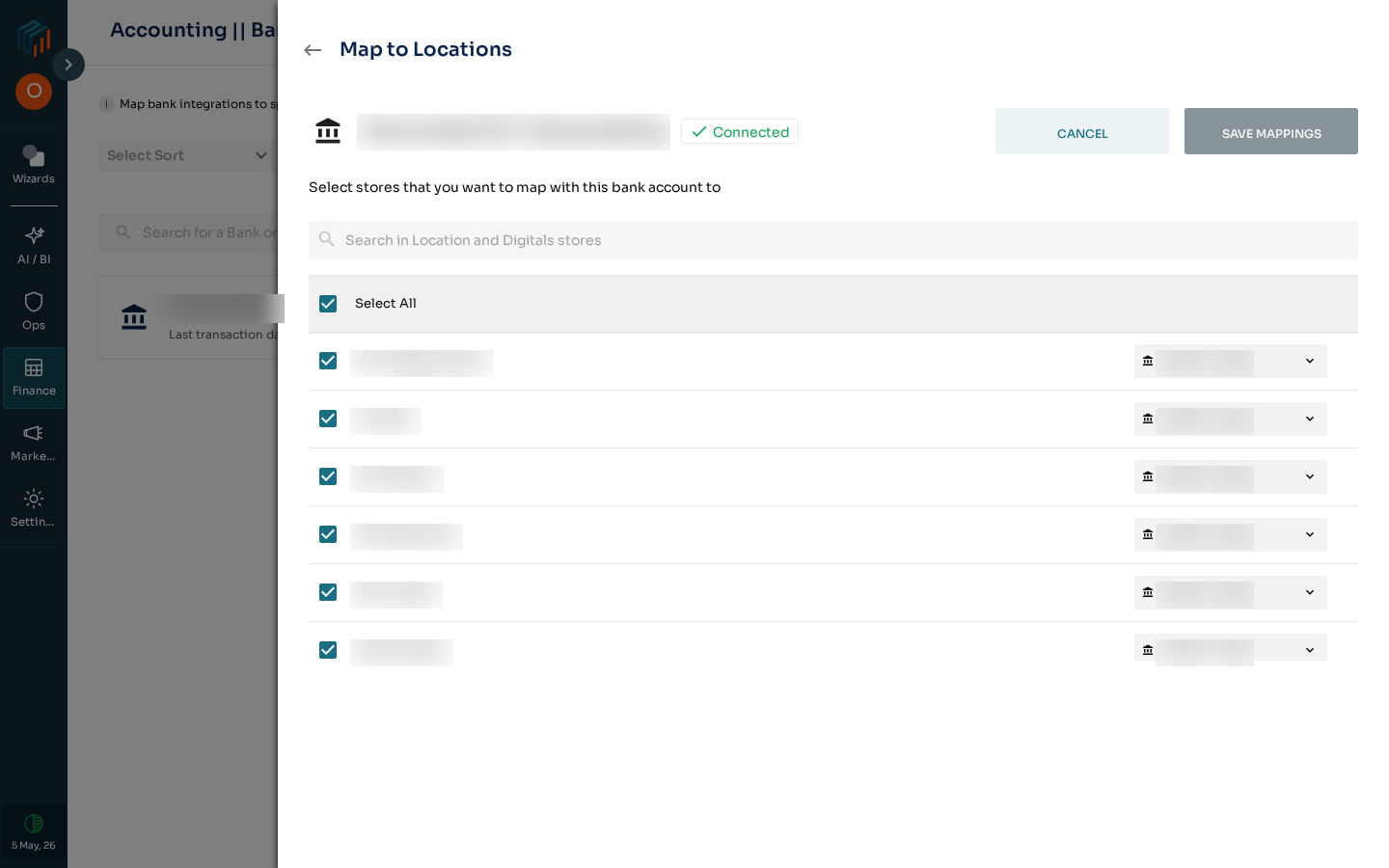
Tip: Mapping is the single most common cause of variance reports being blank or misattributed. Double-check it at onboarding and any time you add a new store. A single account can be mapped to multiple stores (common for franchisees consolidating deposits) and a single store can be mapped across multiple banks/accounts.
3. Reconnect when credentials expire
Plaid connections eventually expire — typically when your bank rotates passwords, enables new MFA, or after long periods of inactivity. When this happens, Loop stops receiving new transactions and the bank tile shows an orange Reconnect badge along with the date of the last successful sync.
To restore the connection:
- Go to Finance → Accounting → Bank Reconciliation → Connect bank account by store.
- Find the bank tile flagged with the orange Reconnect badge.
- Click the Reconnect badge. Plaid Link will open in re-auth mode — sign in again and complete any MFA.
- The badge flips back to green Connected and Loop resumes pulling transactions.
Existing location mappings are preserved during a reconnect. You do not need to remap.
4. Disconnect a bank
To remove a bank from Loop:
- Open the Bank Accounts panel (Finance → Accounting → Bank Reconciliation → Connect bank account by store).
- On the bank tile, click the trash icon on the far right.
- Confirm. Loop stops syncing new transactions for that bank and removes its location mappings.
Historical transactions and reconciliation reports already produced are retained.
5. Upload bank statements manually
If your bank isn't supported by Plaid (or your treasury policy prohibits aggregator connections), use Bank Data Upload to feed statements in directly.
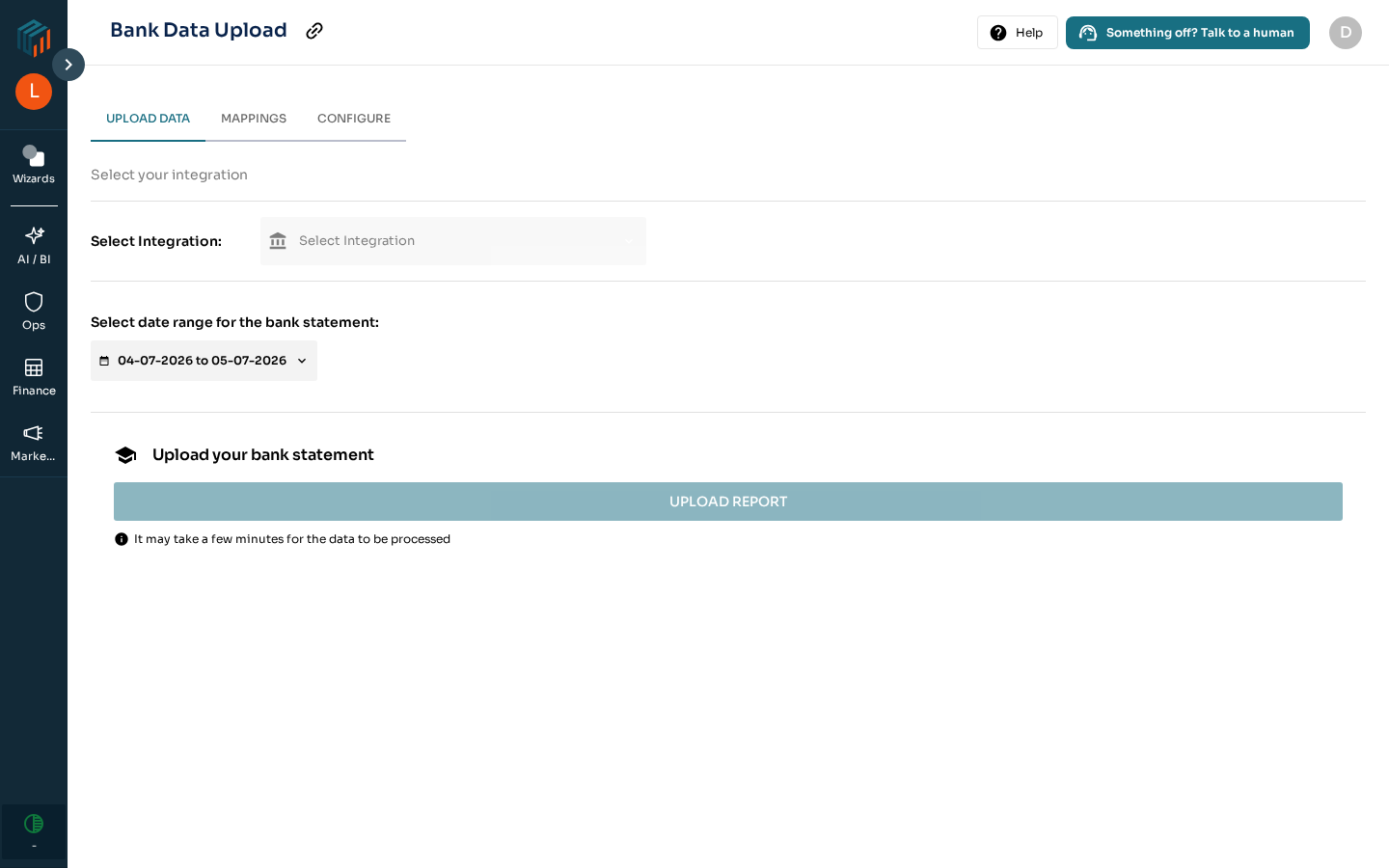
- From the Bank Reconciliation page, click Upload bank data in the top right (or navigate via the Finance → Accounting menu to Bank Data Upload).
- The page has three tabs:
- UPLOAD DATA — pick the bank integration, choose a date range, and upload the bank statement file.
- MAPPINGS — map the uploaded file's accounts/columns to your Loop locations and ledger codes.
- CONFIGURE — set per-bank ingestion preferences (column mappings, date formats, etc.).
- Once uploaded and mapped, the statements feed into Bank Reconciliation alongside Plaid-sourced data.
Manual upload and Plaid can coexist — use Plaid for supported banks and manual upload for the rest.
Connection status reference
| Indicator | Meaning |
|---|---|
| Green Connected | Plaid is actively syncing transactions. |
| Orange Reconnect | Credentials expired or MFA pending — click to re-auth. |
| Last transaction date | The date of the most recent transaction Loop received. If this falls behind by more than a few days on an active bank, reconnect. |
Need help?
If you run into issues connecting, reconnecting, or mapping bank accounts, contact support@tryloop.ai with:
- The bank name
- The store(s) affected
- A screenshot of the bank tile (so we can see the connection status)